

Pearls of India Slot: The Definitive Review and Strategic Guide at Rummy 91
The digital entertainment architecture in India has undergone a massive paradigm shift. Contemporary players have transitioned rapidly from casual, localized card games toward high-fidelity, high-volatility online casino deployments that demand tactical oversight and bankroll discipline. Among the elite catalog of video slots tailored to match the sophisticated preferences of the subcontinent’s players, few titles hold as much engineering prestige as Pearls of India. Developed by the renowned software architects at Play’n GO, this structural masterpiece seamlessly intertwines ancient theological narrative frameworks with state-of-the-art computational mechanics.
At Rummy 91, our operational objective extends far beyond providing an entry point for real-money gaming; we aim to deliver deep, data-driven transparency. This technical guide serves as an analytical roadmap for both high-stakes professionals and systematic enthusiasts. Below, we break down the game’s mathematical models, reel mechanics, compliance profiles, and volatility characteristics that dictate your session trajectories on our platform.
Technical Specifications and Mathematical Architecture
Unlike conventional legacy slot machines that rely on rigid mechanical spin boundaries, Pearls of India operates on an advanced Cascade/Avalanche Reel Mechanics platform. Built over a standardized $5 \times 3$ grid interface configuration, the game features 20 fixed paylines. This structural layout implies that payline boundaries cannot be modified by the user, ensuring that all structural vector channels remain permanently primed to register winning symbol clusters.
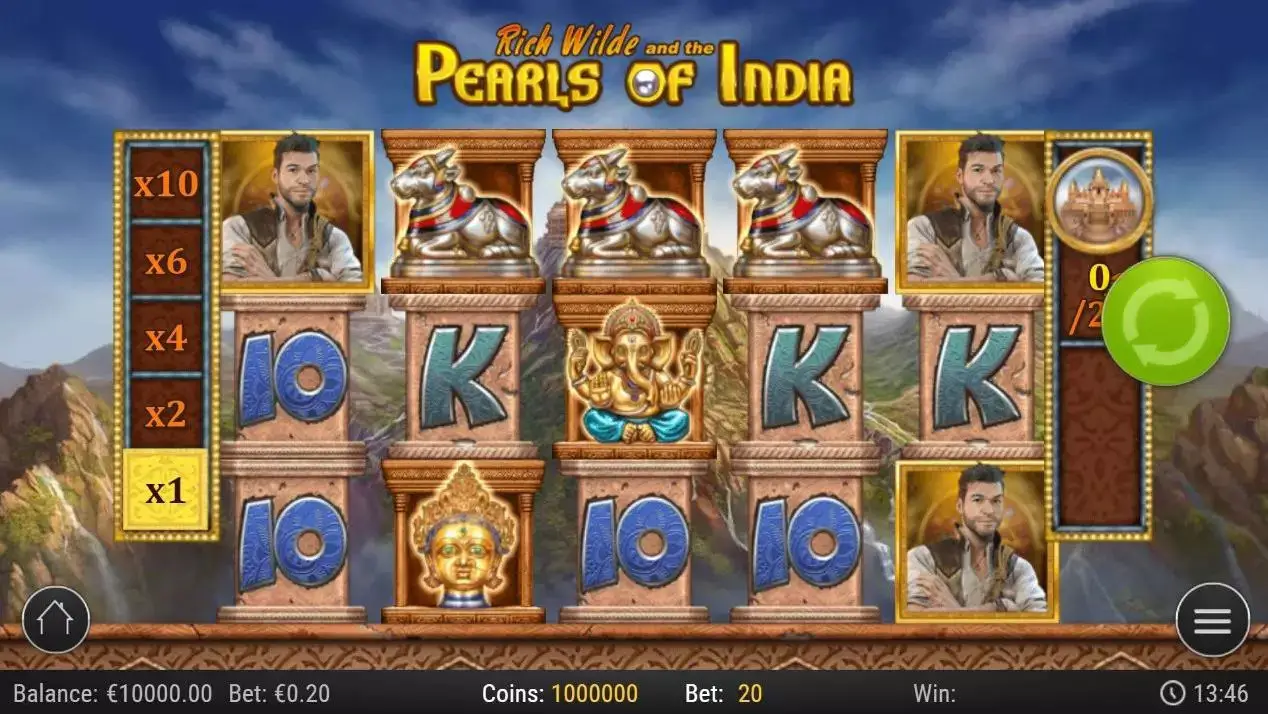
When a winning combination aligns across any of the active vectors from the leftmost reel to the right, the matching symbols undergo an automated programmatic destruction phase. As they dissolve, the engine updates the game state, allowing the symbols directly above to fall into the vacant vertical coordinates under gravitational simulation algorithms. This continuous cycle means a single initial wager can trigger an extended sequence of secondary, tertiary, and quaternary payouts within the same game loop, while simultaneously advancing the system’s progressive multiplier tracking engine.
Core Engine Telemetry Matrix
| Technical Parameter Index | Engine Specification Data | Operational Impact on Player Bankroll |
|---|---|---|
| Software Architect | Play’n GO | Guarantees certified, tamper-proof, server-side execution frameworks. |
| Grid Configuration | 5 Reels x 3 Rows | Generates exactly 15 active coordinate matrices per discrete round. |
| Payline Distribution | 20 Fixed Paylines | Wagers are spread evenly; math models prioritize left-to-right tracking. |
| Default Return to Player (RTP) | 96.21% | The mathematical long-term payback ratio calculated over a multi-million spin lifecycle. |
| Volatility Classification | High (8.5 out of 10) | Extended non-paying spells offset by significant capital scaling during bonus cycles. |
| Maximum Cap Payout | 250,000 Coins | Achieved through peak multiplier accumulation within the Free Spins mechanism. |
| Wagering Boundaries | ₹20 to ₹10,000 per cycle | Scalable micro-betting and macro-stakes capabilities integrated seamlessly. |
Enforcing an RTP of 96.21% puts this game ahead of traditional brick-and-mortar setups and most contemporary alternatives on the market. However, because of its high volatility profile, players must approach sessions with calculated financial pacing. Payout frequencies form non-linear distribution waves, making structural bankroll division—ensuring your budget can withstand the dry baseline spells—the key difference between losing control and securing a massive payout cycle.
Iconography and Indian Regulatory Verification
Every item within the visual display of Pearls of India is designed to combine cultural depth with strict technological compliance. Symbols are grouped into rigorous value tiers: lower values utilize stylized playing card representations ($10$ through $A$), while premium assets consist of high-value cultural artifacts, including sacred Golden Cows, Mystical Elephants, and Majestic Hand Statues. Rich Wilde—the archetype explorer—serves as the foundational Wild Symbol, instantly substituting for any standard payline element to optimize your winning configurations.
At Rummy 91, we make sure player confidence is backed by independent data verification. Every spin generated within our system is validated by external auditing entities to guarantee that game outcomes are completely free from administrative bias or operator interference.
Authorized Indian Compliance & Structural Resource Index
| Regulatory / Auditing Authority | Operational Verification Mandate | Official Non-Commercial Reference Portal |
|---|---|---|
| iTech Labs Systems | Performs algorithmic assessments on the source code of Play’n GO titles, validating that Random Number Generators match true probability fields. | iTech Labs Global Certification |
| All India Gaming Federation (AIGF) | Acts as the premier self-regulatory framework establishing policy guidelines, consumer protection layers, and legal boundaries across diverse Indian jurisdictions. | AIGF Official Compliance Hub |
| E-Gaming Federation (EGF) | Develops and maintains structural codes of conduct for online gaming networks operating within the Indian market, focusing on fair play and financial safety. | EGF Code of Conduct Directory |
Mechanics of the Base Game Multiplier Climb
The defining element of the base game loop is the Progressive Multiplier Progression Meter, clearly visible at the top of the user interface. When winning combinations land, their total monetary values are instantly locked into the player’s session ledger. The symbols then dissolve, activating the avalanche mechanism.
[Paid Spin Inception] ──► [Payout Registered] ──► [Icons Dissolve & Collapse]
 │
 ▼
[Multiplier Tiers Step Up] ◄── [Secondary Combinations Form] ◄── [New Symbols Drop]
For every consecutive avalanche triggered within a single paid spin cycle, the system steps up your global multiplier through four rigid tiers:
- Initial Baseline Hit: All payouts calculated at a $1\times$ Multiplier.
- First Cascade Transition: Secondary payout sequences receive a $2\times$ Multiplier.
- Second Cascade Transition: Tertiary symbol connections receive a $4\times$ Multiplier.
- Third Cascade & Continuous Loops: Maximum base game scaling of a $10\times$ Multiplier applied to all subsequent cascades within that round.
This progressive scaling means that even a low-tier payout at the start of a round can clear out spaces and set up high-value premium symbols for a massive $10\times$ payout later in the cascade sequence.
Advanced Feature Engines, Bonus Integration, and Volatility Analytics
While the base game avalanche system provides a steady rhythm of play, the true capital-scaling capability of Pearls of India lies deep within its secondary feature modules and bonus sub-routines. These elements are not just random visual events; they are complex mathematical sub-routines that require specific structural milestones to trigger. By understanding the data profiles and entry requirements of these features, players on the Rummy 91 platform can better manage their session expectations and tailor their staking strategies accordingly.
The Pearl Collection Engine and Triple-Option Bonus Sub-Games
Unlike modern slots that use simple, single-turn Scatter triggers, Pearls of India features a continuous tracking system known as the Pearl Collection Engine. Situated to the left of the main $5 \times 3$ grid interface, this meter tracks the appearance of individual Pearl symbols across all reels during base game play.
Every time a Pearl symbol lands anywhere on the matrix, it is instantly registered and added to the cumulative counter, regardless of whether it forms a paying combination or appears during a consecutive avalanche. The system stores this progress directly on the server level tied to your Rummy 91 user profile, ensuring your collection progress is saved even if you close the application or log out of your session.
The Milestones of the Pearl Collection System
| Pearl Collection Tier | Required Token Accumulation | Activated Game Sub-Routine | Maximum Financial Multiplier Potential |
|---|---|---|---|
| Tier 1: Inception | 1 to 9 Pearls | Baseline monitoring; tracking tokens across variable staking levels. | Standard base payline allocations apply. |
| Tier 2: Intermediate | 10 to 24 Pearls | Progressive meter visualization updates; higher hit-frequency validation checks. | Prepares base configuration for structural shift. |
| Tier 3: Execution | 25 Pearls (Cap) | Immediate suspension of base game; redirection to Temple Bonus Picker. | Up to 250x Total Multiplier |
When you hit the milestone of 25 accumulated pearls, the base game interface pauses, and the system opens a custom interface presenting three distinct ancient temples. Players must choose one temple, each leading to a unique interactive bonus game built with its own volatility and risk-reward profile:
- The Statue of Vishnu Bonus: Players select from a series of sacred pearls displayed on the screen. Each selection reveals either an instant cash prize or a collection-ending token. This feature operates on a medium-variance model, delivering consistent, mid-tier payouts.
- The Wheel of Shiva Bonus: A localized variance model that takes players to an ancient, multi-tiered mechanical prize wheel. Spinning the wheel awards definitive multipliers based on where it stops, making it highly popular with players looking for quick, high-value outcomes.
- The Sacred Wall Bonus: A high-volatility, plinko-style sub-game. Players drop sacred spheres down an ancient stone grid embedded with peg obstacles. The spheres bounce dynamically before landing in prize slots at the bottom, offering rewards that range from micro-returns to massive financial windfalls.
Free Spins Sub-Routine with Up to 50x Scaling Multipliers
While the Temple Picker offers excellent immediate returns, the ultimate high-yield objective in Pearls of India is triggering the Free Spins Sub-Routine. This feature is activated by landing three specialized Temple Scatter symbols anywhere on the 1st, 3rd, and 5th reels within a single cascade sequence. Upon validation, the engine awards an initial flight of 10 Free Spins.
During this bonus round, the standard base game progressive multiplier bar undergoes a dramatic upgrade. The scaling factors are multiplied by five, completely shifting the game’s volatility profile and unlocking massive win potential:
- Initial Spin Win: Payouts start with an upgraded baseline $5\times$ Multiplier.
- First Free Spins Avalanche: Secondary combinations instantly jump to a $10\times$ Multiplier.
- Second Free Spins Avalanche: Tertiary payouts are boosted by a $20\times$ Multiplier.
- Third Free Spins Avalanche (and continuous drops): The pinnacle of the game’s math engine—a massive $50\times$ Multiplier applied to all consecutive payouts within that spin sequence.
Additionally, landing three more Temple Scatters during the bonus round retriggers the feature, adding 10 more free spins to your session balance. This retrigger mechanic can repeat up to a maximum cap of 30 cumulative free spins, allowing strategic players on Rummy 91 to build significant momentum and secure major payouts.
High-Volatility Bankroll Allocation Analytics
To find success on Pearls of India, players must look beyond the theme and visuals and analyze the game’s mathematical volatility curve. High-volatility slots do not distribute payouts in a predictable, linear fashion. Instead, capital returns follow a wave pattern, characterized by extended periods of low-yield or non-paying spins, followed by sudden, intense payout clusters during bonus triggers.
The interactive-style data visualization below illustrates how bankroll behaves across an extended session of 500 simulated spins on Rummy 91, highlighting why disciplined staking is essential to survive the baseline dry spells and hit the high-yield bonus rounds.
Bankroll Trajectory and Volatility Variance Simulation (500 Spin Lifecycle)
Statistical Trend Analysis: Real-Money Capital Scaling Performance
₹10,000
Spins 1-50
-₹3,400
Spins 51-150
+₹8,200
Spins 151-220
₹11,500
Spins 221-350
-₹4,100
Spins 351-420
+₹32,000
Spins 421-500
Analytical Takeaway: High-volatility profiles demand that players maintain a minimum capital reserve equivalent to 150-200 base bets. This buffer ensures you can comfortably absorb the natural variance drawdowns (such as the drop seen in the 51-150 spin block) and keep your strategy active until hitting high-value feature rounds like the Free Spins cascade.
Algorithmic Bet Sizing, Infrastructure Optimization, and Expert Synthesis
Navigating a high-volatility game environment successfully requires more than just understanding the rules; it demands an actionable execution strategy. To fully unlock the financial potential of Pearls of India, players must transition from random spin actions to systemic bankroll management. This final section provides a breakdown of advanced wagering strategies, explores the mobile infrastructure requirements for seamless gameplay in India, and delivers our complete expert conclusion alongside an integrated FAQ system.
Strategic Wagering Frameworks and Risk-Mitigation Models
Because Pearls of India features non-linear payout distribution waves, using a static flat-betting approach (staking the exact same amount on every spin) often leads to gradual bankroll depletion before you hit the high-yield bonus rounds. To survive the baseline dry spells and maximize returns during multiplier cascades, professional players utilize structured staking models.
Two prominent mathematical strategies can be adapted specifically for the mechanics of this slot game:
- The Volatility Buffer Strategy (Kelly Criterion Variant): This model scales your wager size based on your current total session capital. Instead of chasing losses with higher bets, you restrict your base stakes to exactly 0.5% to 1% of your overall bankroll. This approach ensures you have enough capital to sustain a minimum lifecycle of 150 to 200 spins, giving you the runway needed to trigger the Pearl Collection Engine or activate the Free Spins bonus.
- The Milestone Step-Up Strategy: This approach shifts your staking levels based on your progress on the Pearl Collection meter. Players start with a conservative, entry-level base bet during the initial collection phase (0 to 9 pearls). Once the meter hits Tier 2 (10 to 24 pearls), the system status is primed for a bonus trigger, and the player increases their stake sizing by 1.5x to 2x. This ensures that when the 25th pearl lands and triggers the Temple Picker Bonus, the resulting multipliers are calculated against a much larger base stake.
Comparative Risk-Reward Metrics of Professional Staking Strategies
5G Mobile Infrastructure and Optimization Metrics for Indian Networks
In 2026, mobile devices are the primary gateway for elite digital gaming across India. Because Pearls of India relies on complex, multi-tiered cascade physics and real-time state tracking, maintaining an optimized hardware and network setup is critical to prevent gameplay interruptions.
To ensure seamless execution, the Rummy 91 mobile platform uses native architecture optimized for India’s high-speed 5G networks. When a winning combination explodes, our backend transmits game data packets using minimal bandwidth, ensuring instant state synchronization.
To maximize performance, players should ensure their setups meet the following standards:
- Network Stability: While our engine handles minor packet loss smoothly, playing on a stable 5G connection or a 5GHz Wi-Fi network keeps data latency below 45ms. This responsiveness is vital during rapid, consecutive cascades.
- Hardware Allocation: For the best experience with the game’s advanced HTML5 animations, we recommend using a device with at least 4GB of operational RAM and keeping your mobile browser (such as Chrome or Safari) updated to its latest version.
- Interruption Handling: If your connection drops unexpectedly during a spin cycle, our server-side safety protocols protect your funds. The underlying RNG instantly finishes calculating the spin outcome on our secure servers, and any winnings are automatically credited directly to your Rummy 91 core balance.
Comprehensive Analytical Conclusion
Pearls of India is a masterclass in high-volatility slot engineering, successfully combining cultural immersion with a deep, rewarding mathematical engine. Play’n GO has created a title that moves past simple slot mechanics by introducing the progressive avalanche multiplier tracking system and the persistent Pearl Collection Engine. With a strong 96.21% default RTP and a massive maximum payout potential of 250,000 coins, it remains a top choice for players who value strategy, patience, and calculated risk management.
At Rummy 91, we ensure your gaming experience is supported by absolute transparency, verified RNG integrity, and instant local withdrawal processing. Success in this mystical slot game requires treating it as a strategic challenge: maintain a disciplined bankroll buffer, adjust your stakes logically as your pearl collection grows, and use the platform’s native tools to keep your play balanced and sustainable. Prepare your strategy, monitor your metrics, and experience the thrill of the cascade on Rummy 91.
Frequently Asked Questions (FAQ)
Frequently Asked Questions: Pearls of India
1. What is the verified Return to Player (RTP) for Pearls of India at Rummy 91?
The game features a default RTP configuration of 96.21%. This statistical metric represents the long-term return rate verified by independent auditing bodies like iTech Labs over millions of test spin lifecycles.
2. How exactly does the Avalanche/Cascade mechanism work?
When a winning combination lands on an active payline, those symbols dissolve and disappear from the grid. New symbols fall from above to fill the empty spaces, allowing you to hit multiple consecutive wins on a single paid spin.
3. What are the multiplier limits during base game cascades?
During the base game, consecutive cascades increase your win multiplier through a fixed sequence: 1x on the initial hit, followed by 2x, 4x, and a maximum cap of 10x for the third consecutive cascade and any subsequent wins within that round.
4. Does my Pearl Collection progress save if I log out of Rummy 91?
Yes. The tracking data for the Pearl Collection Engine is saved directly at the server level tied to your secure user account profile. You can log out or switch devices without losing your progress toward the 25-pearl bonus trigger.
5. How do you trigger the Free Spins round, and what is its maximum multiplier?
The Free Spins round is activated by landing three Temple Scatter symbols on reels 1, 3, and 5 within a single spin sequence. This round upgrades the multiplier tracking engine, allowing consecutive wins to scale up to a maximum of 50x.
6. Can the Free Spins bonus round be retriggered?
Yes. Landing three more Temple Scatter symbols during the bonus feature adds 10 additional free spins to your current session, up to a maximum cumulative limit of 30 free spins.
7. Which temple picker bonus game offers the highest volatility?
The Sacred Wall Bonus uses a high-volatility, plinko-style drop model that offers the widest variance in payouts, ranging from small returns to massive maximum prize tiers.
8. What happens to my bet if my internet connection drops mid-spin?
Your funds and game state remain completely secure. The spin calculation is processed instantly on our servers using the authenticated RNG result. Any payouts due are automatically added directly to your account wallet balance.
9. Is Pearls of India classified as a low, medium, or high variance slot?
The game is classified as a high-volatility slot (rated 8.5 out of 10). It is designed to award larger capital payouts through its bonus mechanics, balanced by longer sequences of non-paying spins during base play.
10. What is the minimum bet required to play on this machine at Rummy 91?
The minimum entry wager starts at just ₹20 per spin across all 20 fixed paylines, making it accessible for casual players while scaling up comfortably for high-rollers.